Contact Us
Men's Sports Inner Wear: How to Choose the Right Innerwear for Gym Performance
Good training is rarely derailed by a lack of motivation. More often, it is the small distractions: fabric that sticks, a waistband that rolls, or seams that rub when you start sweating. In an Indian gym, where humidity, uneven air-conditioning, and long commutes after workouts are common for many, your base layer matters more than you think. The right men's sports innerwear keeps you comfortable, supports clean movement, and helps you stay focused on form instead of fiddling with your clothes.
Why innerwear affects performance
Innerwear sits at the point where sweat, friction, and movement meet. When it manages moisture and stays stable, you feel lighter, cooler, and more confident during sets and cardio intervals. It can also reduce skin irritation, which matters if you train frequently or do a lot of walking, lunges, sprints, and rowing.
Fabric: choose for sweat, skin, and stretch
Fabric is the first filter for performance. You are looking for breathability, softness on skin, and enough stretch to move without resistance.
Cotton and cotton-rich blends
Cotton is popular because it feels comfortable and breathable. For gym use, fine-combed cotton or cotton-rich blends can feel smoother and less abrasive, especially once you are sweaty. If the fabric includes a small percentage of elastane, it usually improves shape retention and reduces sagging after washes.
Moisture handling
No fabric makes you “sweat-free”, but some knits and finishes move moisture away from the skin faster than basic cotton. This matters when you do HIIT, treadmill intervals, or long strength sessions. The goal is to avoid a clingy, sticky feel that leads to chafing. If your innerwear feels damp for a long time after a workout, it is worth trying a lighter knit or a cotton blend that dries more quickly.
Avoid these red flags
- Thick, heavy fabric that stays damp for long time
- Rough texture that feels scratchy when you rub it between your fingers
- Fabric that pills quickly, because pilling increases friction
If you want a simple rule, pick sports innerwear that still feels smooth when you walk briskly, lunge, and squat.
Fit and cut: stability without squeezing
Fit should be snug enough to stay in place, but never so tight that it leaves marks or restricts breathing. A reliable way to judge fit is to try three movements.
- Deep squat: check for digging at the leg opening
- Hip hinge: check that the waistband does not fold or slide
- Lunge and twist: check for pulling or bunching
For briefs and trunks, the pouch area should feel supportive without compression. If you prefer longer-leg styles, make sure the hem does not ride up, which is a common trigger for inner-thigh irritation.
Choose a style that suits your body and session
The “best” style is the one that matches your build, your sweat pattern, and the exercises you do most.
- Briefs: Often preferred for heavy lower-body days because there is less fabric to bunch up, and support can feel more direct.
- Trunks: A balanced option if you want a bit more leg coverage without the longer hem of boxer briefs.
- Boxer-brief styles: Useful if you chafe on the inner thighs, because the extra length can reduce skin-on-skin contact.
Also consider rise. A very low rise may slide during squats, while a very high rise can feel hotter during cardio. When choosing sports innerwear for men, aim for a rise that stays stable when you brace your core and breathe hard.
Seams, waistbands, and labels: the comfort multipliers
Construction details decide whether a good fabric feels great or becomes annoying after 20 minutes.
- Flat or smooth seams reduce rubbing along the inner thigh and seat
- Covered elastic waistbands feel softer and sit flatter under gym bottoms
- Tagless or printed labels prevent scratching on the lower back
If you have sensitive skin, pay extra attention here. These details are often the difference between “fine” and genuinely comfortable gym innerwear for men.
Support: pick your level and stick to it
Support is personal, but your training style gives clues. Heavy lifting and explosive movements usually feel better with a more secure fit. Steady-state cardio may prioritise moisture control and freedom. If you are prone to chafing, a cut that reduces skin-on-skin contact can be the biggest win. The best innerwear for gym is the one you stop noticing once the warm-up ends.
Choosing the right inner vest for training
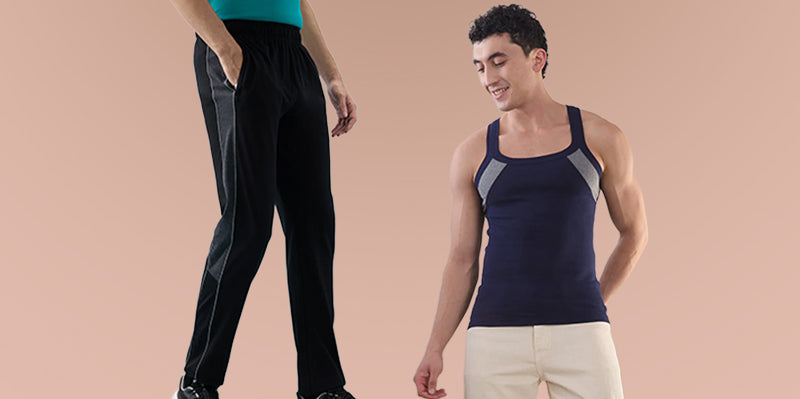
A vest is a popular gym staple because it keeps the shoulder line free and manages sweat under outer layers. When shopping for gym vests for men, look for a breathable, soft fabric that does not feel stiff across the chest.
Pay attention to:
- Armholes that do not bite into the underarm during presses and rows
- A neckline that stays flat instead of stretching out quickly
- A length that stays stable when you raise your arms overhead
If you wear it as a base layer, a well-cut gym inner vest can also keep your outer T-shirt cleaner and reduce that damp chill when you step outside after training.
Pairing with bottoms, including track pants for men
Your base layer should work with what you wear over it. If you train in shorts, avoid having two hems meet at the same spot, because that can create friction. When checking track pants for men, ensure the inner waistband is not bulky under the drawcord and that the fabric does not cling excessively, which can make the outer layer feel tighter than it is.
Hygiene, care, and replacement
Innerwear absorbs the most sweat, so hygiene is part of performance and skin health.
- Change soon after your workout, especially during monsoon humidity
- Wash with a gentle detergent and rinse well to avoid residue
- Avoid very high heat drying if you want elasticity to last
- Rotate enough pairs so each one gets time to dry fully between sessions
Replace pieces that have lost stretch, developed rough pilling, or started shifting during movement.
Conclusion
Choosing men's sports innerwear is a small decision with a big impact. Start with fabric that feels breathable and smooth, then prioritise fit that stays stable through squats, lunges, and sprints. Finally, look at seams, waistbands, and labels, as they determine whether comfort lasts throughout the session. Get these basics right, and your workouts feel cleaner, cooler, and far more focused.
-
Posted in
Fitness